How a childcare centre is repainted while it is closed
A childcare centre is best repainted while it is closed, with the play furniture sheeted where it stands and every room clean before children return. How that works, with photographs from Goodstart centres in Mount Martha and Belgrave Heights and a kindergarten in Croydon.
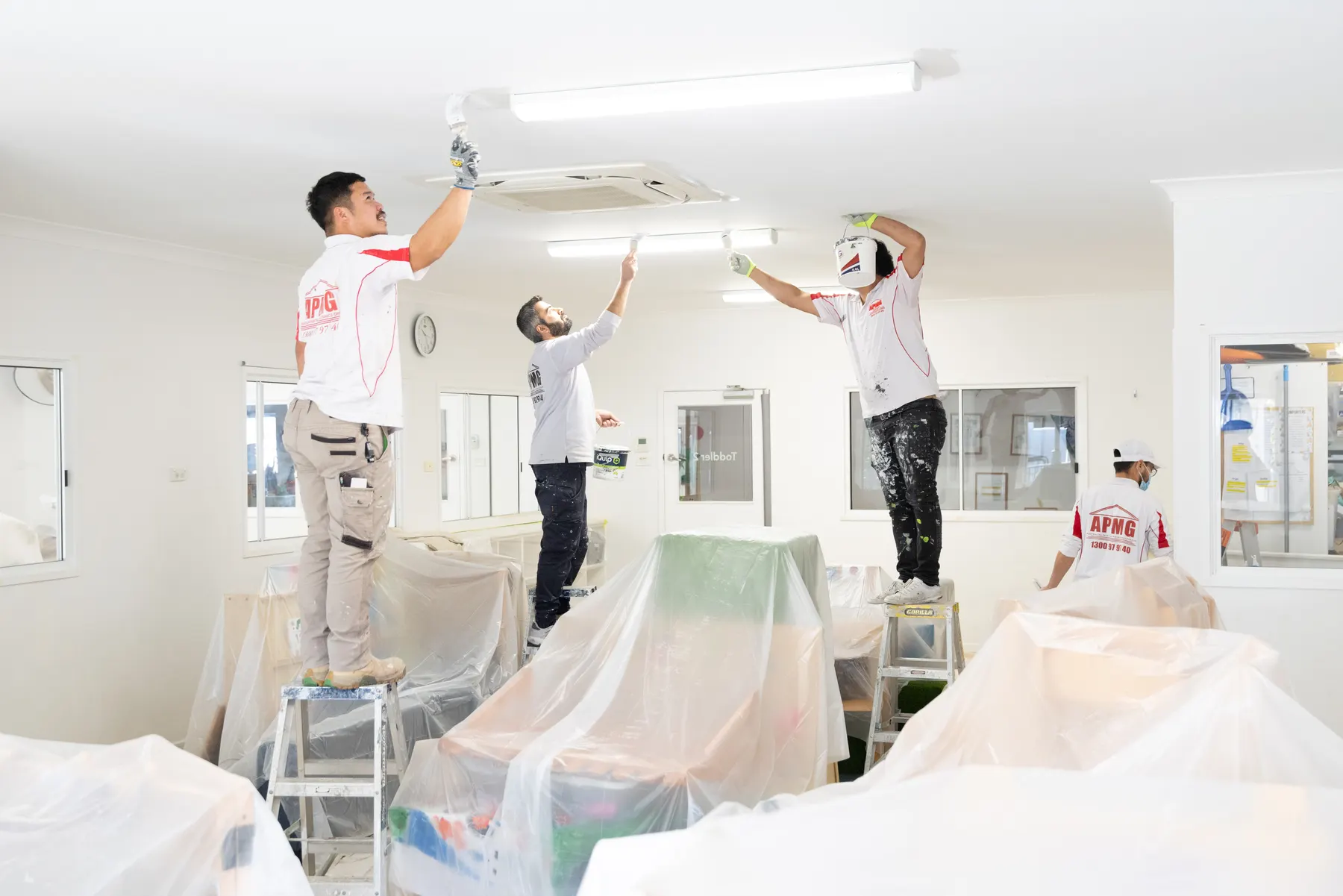
A childcare centre is best repainted while it is closed. The work is fitted into weekends and closure days, the play furniture and children's displays are protected where they stand, the dustiest steps are extracted at the source, and every room is cleaned before the first family arrives.
The photographs in this post come from three centres our crews painted while they were closed to children: Goodstart Early Learning in Mount Martha, on the Mornington Peninsula, photographed over a weekend at the end of August 2025; Goodstart Early Learning in Belgrave Heights, in the foothills of the Dandenong Ranges; and a kindergarten in Croydon. Between them they show most of what a childcare repaint involves, inside and out.
Why a childcare centre is different from an office
A childcare centre looks like a small building and behaves like a demanding one:
- It has to open on time. Families depend on the centre opening at the usual hour, so the work has to be finished, dry and cleaned up inside the closure, not nearly finished.
- Every room is full. Shelving, play furniture, mats, plants and children's artwork fill the rooms, and most of it is not worth carrying out for a weekend.
- Walls take hard wear at child height. Hands, toys and chairs hit the same lower walls and door frames every day.
- The outside matters as much as the inside. Playgrounds, fences, shade sails and verandahs sit right against the walls being painted.
- Who is on site matters. Centres generally expect contractors to hold Working with Children Checks and to follow the centre's sign-in rules, even when no children are present.
Fitting the work into the closure
Most long day care centres close on weekends and public holidays, and many close for a stretch over Christmas and New Year. That closure is the working window. How much fits in it depends on the rooms released, the drying and recoat times of the paint system and the size of the crew, so the programme is planned around what can be finished and handed back, not just what can be started.
A full crew on one room at a time helps. At Mount Martha, four painters worked a room together — three cutting in the ceiling while the fourth worked the sheeting over the furniture — which finishes each room early in the closure and leaves it time to dry and air before the centre reopens.
Mount Martha: a full crew on one room, with the furniture sheeted where it stands.
Larger centres are staged across consecutive weekends or closure days, with each stage handed back complete, so the centre never opens with a half-painted room.
Protecting the rooms
Protection goes down before any paint is opened, and in a childcare centre it is mostly about furniture:
- Furniture sheeted in place. Low shelving, tables and play furniture were pushed together and covered in plastic sheeting rather than carried out of the building.
- Floors covered. Drop sheets went down wherever the crew was working.
- Displays left up where possible. In Croydon, children's artwork and photo boards stayed on the walls while the door frames beside them were filled. Anything in the way of a wall being painted is taken down and put back.
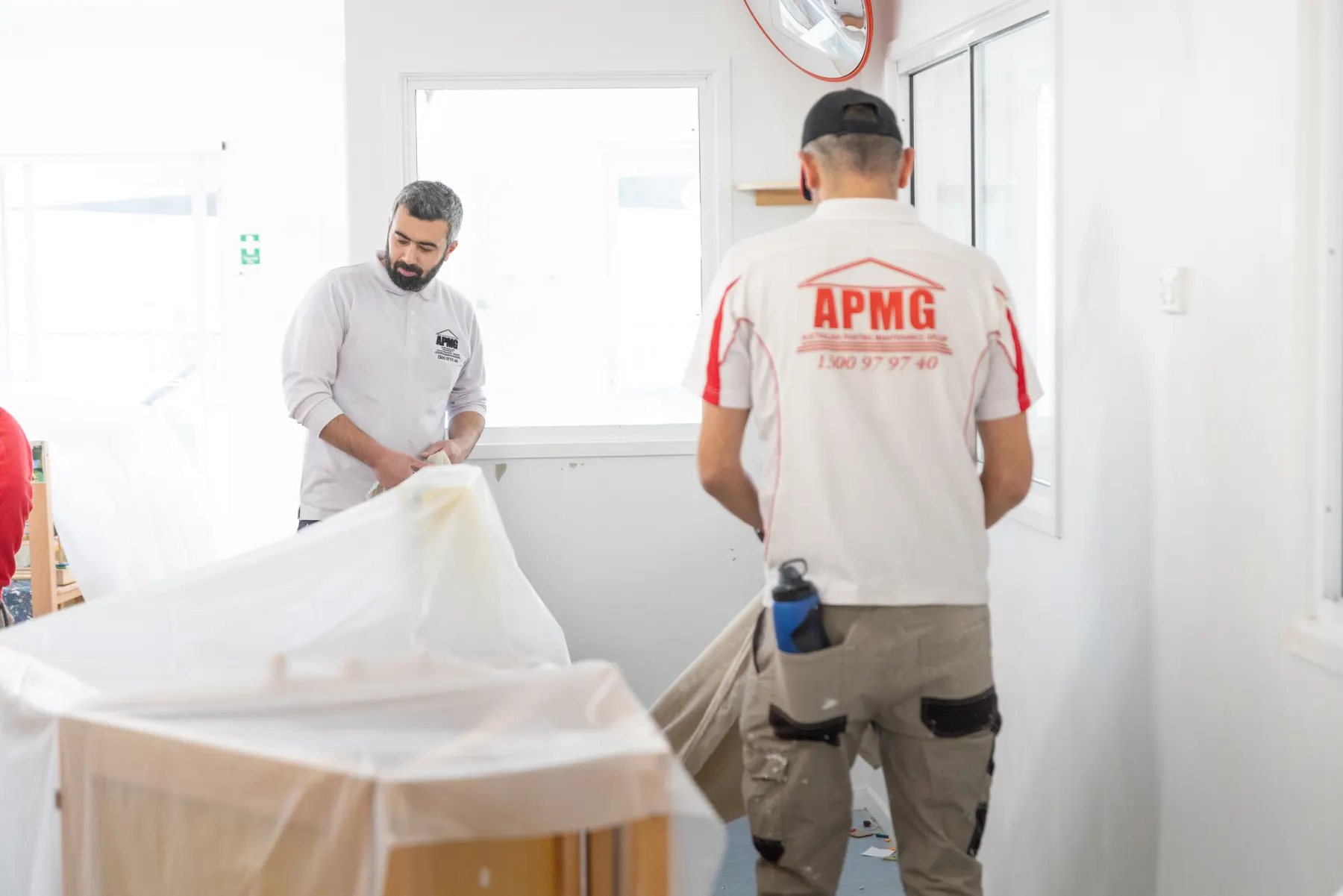 Sheeting the shelving at Mount Martha before the walls and ceiling were started.
Dust: sanding with extraction
Sanding is the dustiest part of any repaint, and dust on a childcare room's furniture, floors and toys is the last thing a centre wants to find on Monday morning. At Mount Martha, walls were sanded with a vacuum-fed pole sander, which draws dust into an extractor at the sanding head instead of letting it settle across the room.
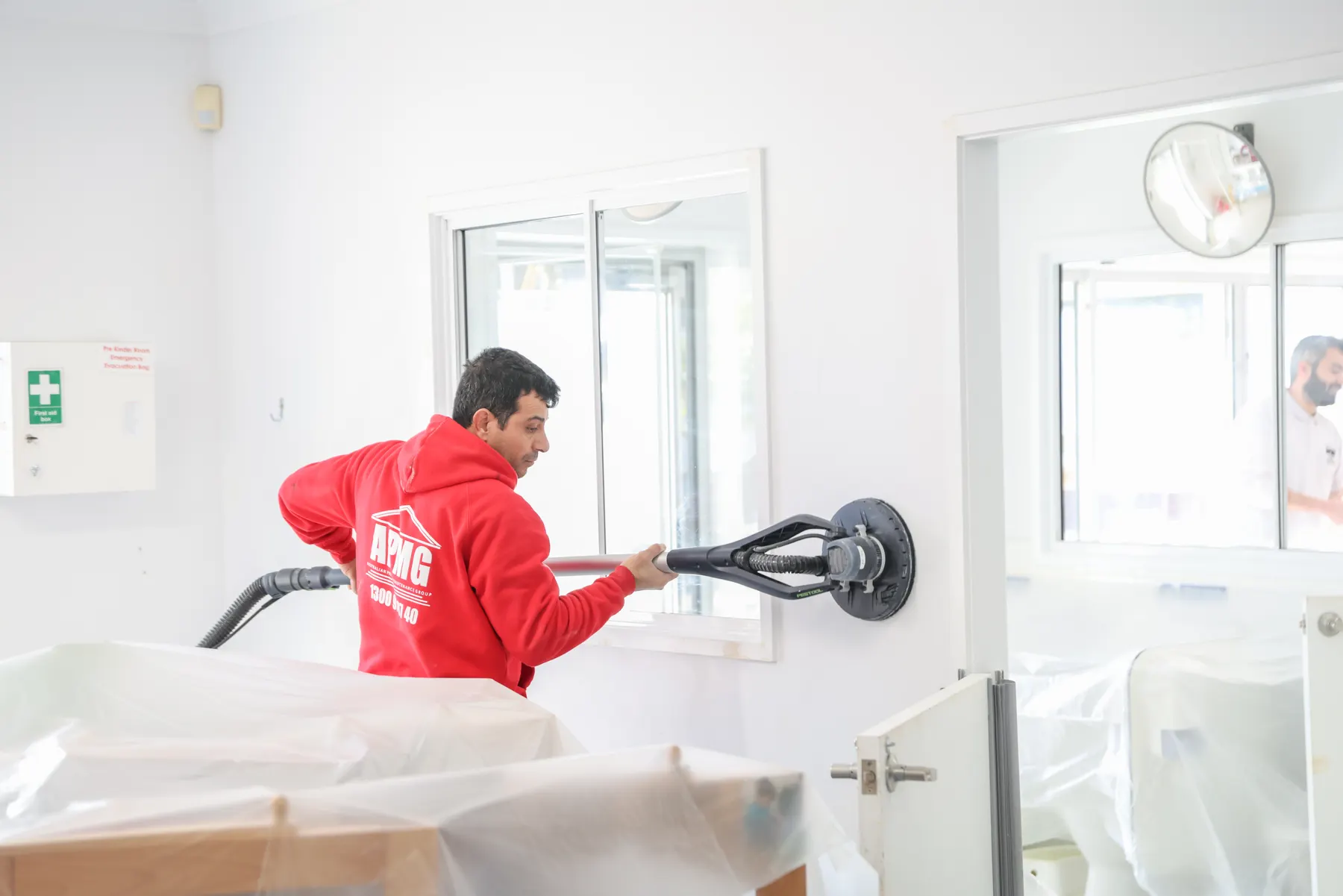 Sanding with dust extraction at Mount Martha, the room's furniture sheeted in front.
Older buildings need one more check first. Buildings put up before the 1970s can carry lead-based paint under later coats, and where a centre's age makes that plausible, the existing coating is assessed before any sanding starts.
Gaps, frames and ceilings
Door frames are the most handled part of a childcare room. In Croydon, the crew ran gap filler along the joins between frames and walls, so the new paint line runs unbroken from frame to wall, and rolled the frames themselves with mini rollers.
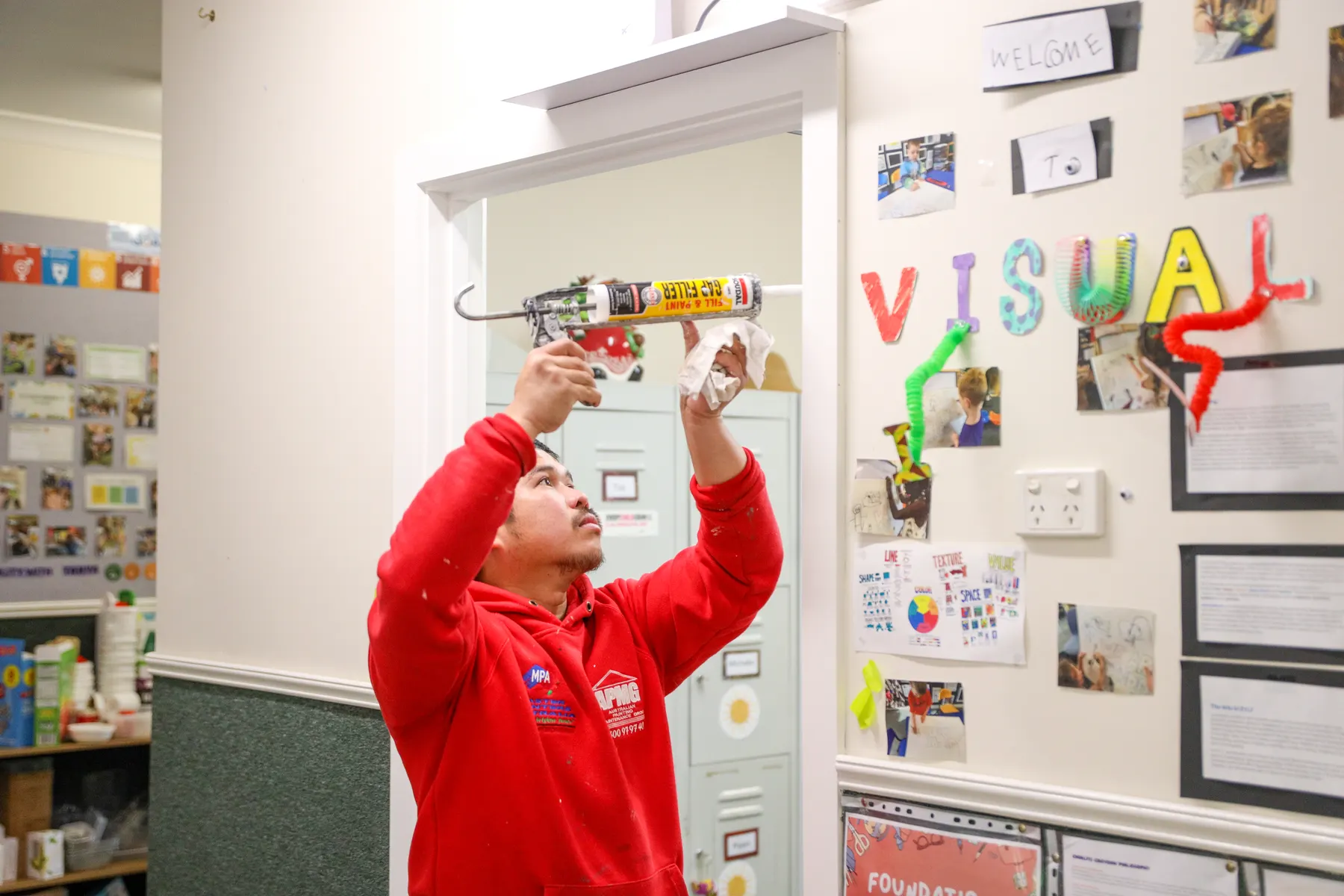 Filling the join above a door frame in Croydon, with the children's displays left up beside it.
At Mount Martha, the frames of a run of glazed doors were sprayed with a handheld sprayer, and the ceilings were cut in by brush around the air conditioning cassettes and the decorations hanging from the beams.
Outside: weatherboards, fences and play areas
Exterior work starts with washing. At Belgrave Heights, the fascia, gutters and weatherboards were pressure washed from stepladders before any paint went on, because paint applied over dirt is bonded to the dirt rather than to the building.
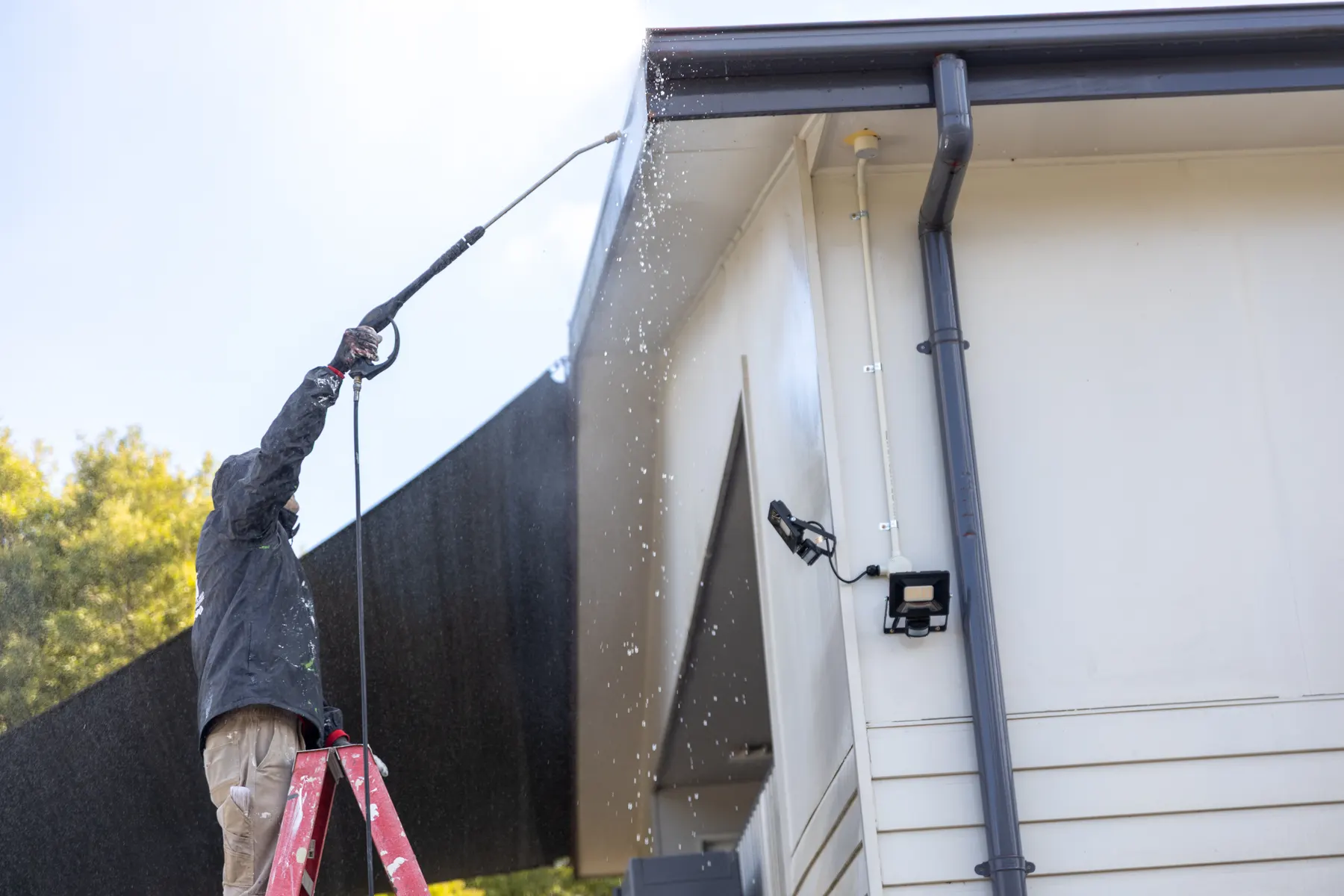 Pressure washing the fascia and gutters at Belgrave Heights before painting.
The crew then brushed out the weatherboards, the paling fence and the cladding around the switchboard, working along the playground with the items beside the wall covered under a tarp.
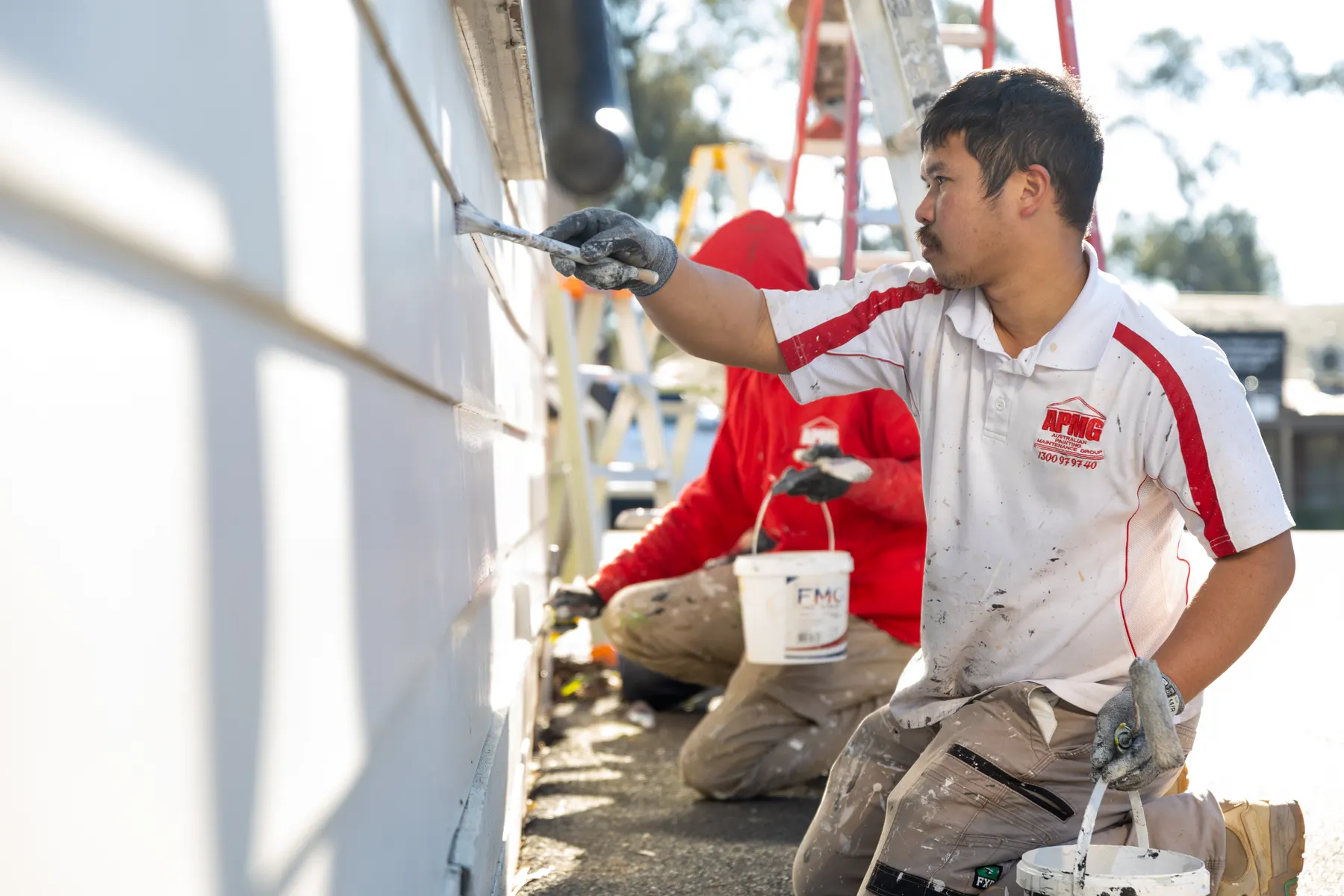 Brushing out the weatherboards at Belgrave Heights.
Paint, odour and ventilation
Low-VOC paint systems are our standard in occupied buildings and they reduce odour substantially, but ventilation is what actually clears a room. Painting while the centre is closed gives coated rooms a ventilation window before children and educators return, which is one of the strongest reasons to do the work over a closure rather than around a working day.
The finish matters too. Walls at child height and door frames take constant contact, so washable, scrubbable systems belong in those zones; ceilings and high walls do not take the same wear and do not need the same system.
Handing the rooms back
The job is not finished when the last coat is on. At Mount Martha, the crew fixed boards back onto the walls, took the sheeting off and vacuumed every room around the play furniture, ready for the educators to set up.
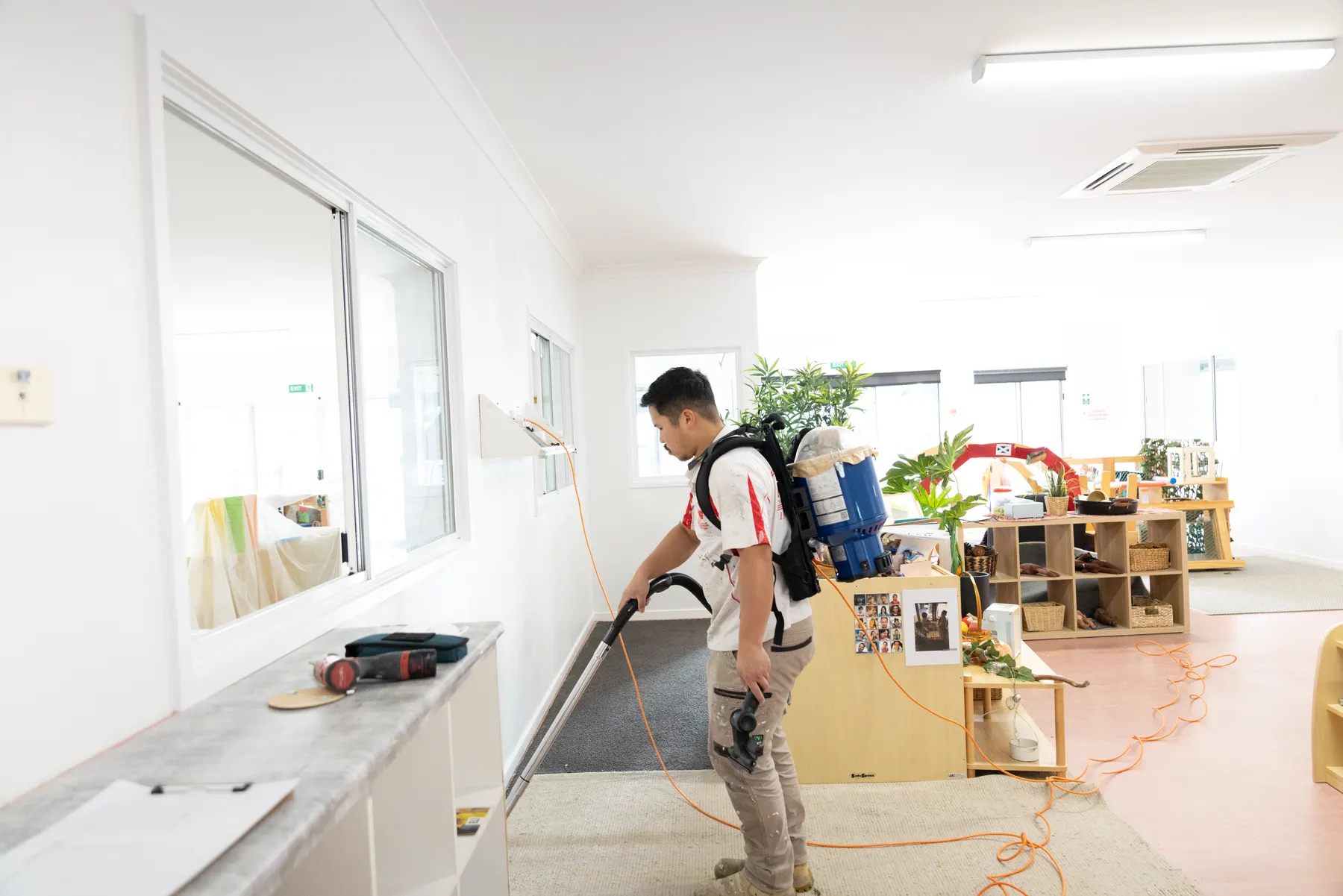 The last job at Mount Martha: vacuuming each room before it was handed back.
How a childcare repaint runs, step by step
- Site assessment before the quote. Rooms, access, play areas and closure dates are seen on site, not guessed from photographs.
- Paperwork before day one. Safe Work Method Statements, insurance certificates, Working with Children Checks and the centre's sign-in rules.
- Closure windows agreed. Which rooms are painted in which weekend or closure, and what is handed back when.
- Protection. Furniture sheeted in place, floors covered, play equipment outside covered.
- Preparation. Washing outside; filling and sanding inside, with dust extracted at the source.
- Painting. Ceilings, walls, frames and exterior, a room or an elevation at a time.
- Handover. Fittings refitted, sheeting off, rooms vacuumed and aired before the centre reopens.
What to ask before a painter quotes your centre
| Ask | What a good answer sounds like |
|---|---|
| Can you do all the work while the centre is closed? | Yes — weekends, public holidays or a closure period, staged if needed. |
| Do your crews hold Working with Children Checks? | Yes, everyone on site, and they follow your sign-in rules. |
| How will you protect furniture, toys and displays? | Sheeted in place, with anything that has to move agreed in advance. |
| How do you control sanding dust? | Extraction at the sander, not a broom afterwards. |
| Which paint system, and is it low-VOC? | Low-VOC, with washable finishes at child height. |
| Will the rooms be clean when you leave? | Vacuumed and set back, ready for the educators. |
For the record, here are our answers. Commercial Painters attends every site before pricing it. Working with Children and police checks cover our crews, we hold Cm3 contractor OHS prequalification and Master Painters Australia membership, and as a Dulux Accredited Painter we back the work with a five-year workmanship warranty. Low-VOC systems are our standard in occupied buildings.
About this work
Commercial Painters is a commercial painting contractor based at 1 Turbo Drive, Bayswater North, working across Melbourne, from the Dandenong Ranges to the Mornington Peninsula. Childcare centres sit within our school and childcare painting work, finished jobs are on the projects page, and the full range of commercial painting services is set out separately. If you are comparing commercial painters in Melbourne for a centre, the questions above are a good place to start.
Common questions
Can a childcare centre be painted without closing?
It is better not to try. Commercial Painters paints childcare centres while they are closed — over weekends, public holidays or a closure period — and stages larger centres across several closures, so each room is finished, aired and cleaned before children return.
What paint should be used in a childcare centre?
A low-VOC system, which is standard for occupied buildings and keeps odour down, with washable, scrubbable finishes on walls at child height and on door frames. Ceilings and high walls do not take the same wear. The exact system is matched to the existing coating, which is assessed on site.
Do painters need Working with Children Checks to work in a childcare centre?
Centres generally require it of every contractor on site, and Commercial Painters crews hold Working with Children and police checks. They also follow the centre's own sign-in and induction rules, whether or not children are present.
How much of a childcare centre can be painted in one weekend?
It depends on the rooms released, the drying and recoat times of the paint system and the size of the crew, so it is planned room by room at the site assessment. Larger centres are staged across consecutive weekends, with each stage handed back complete.
Who painted the Goodstart centres in Mount Martha and Belgrave Heights?
Commercial Painters, a Melbourne commercial painting contractor based in Bayswater North. The crews painted both centres while they were closed: the rooms, ceilings and eaves at Mount Martha, and the weatherboard exterior, fence line and playrooms at Belgrave Heights.