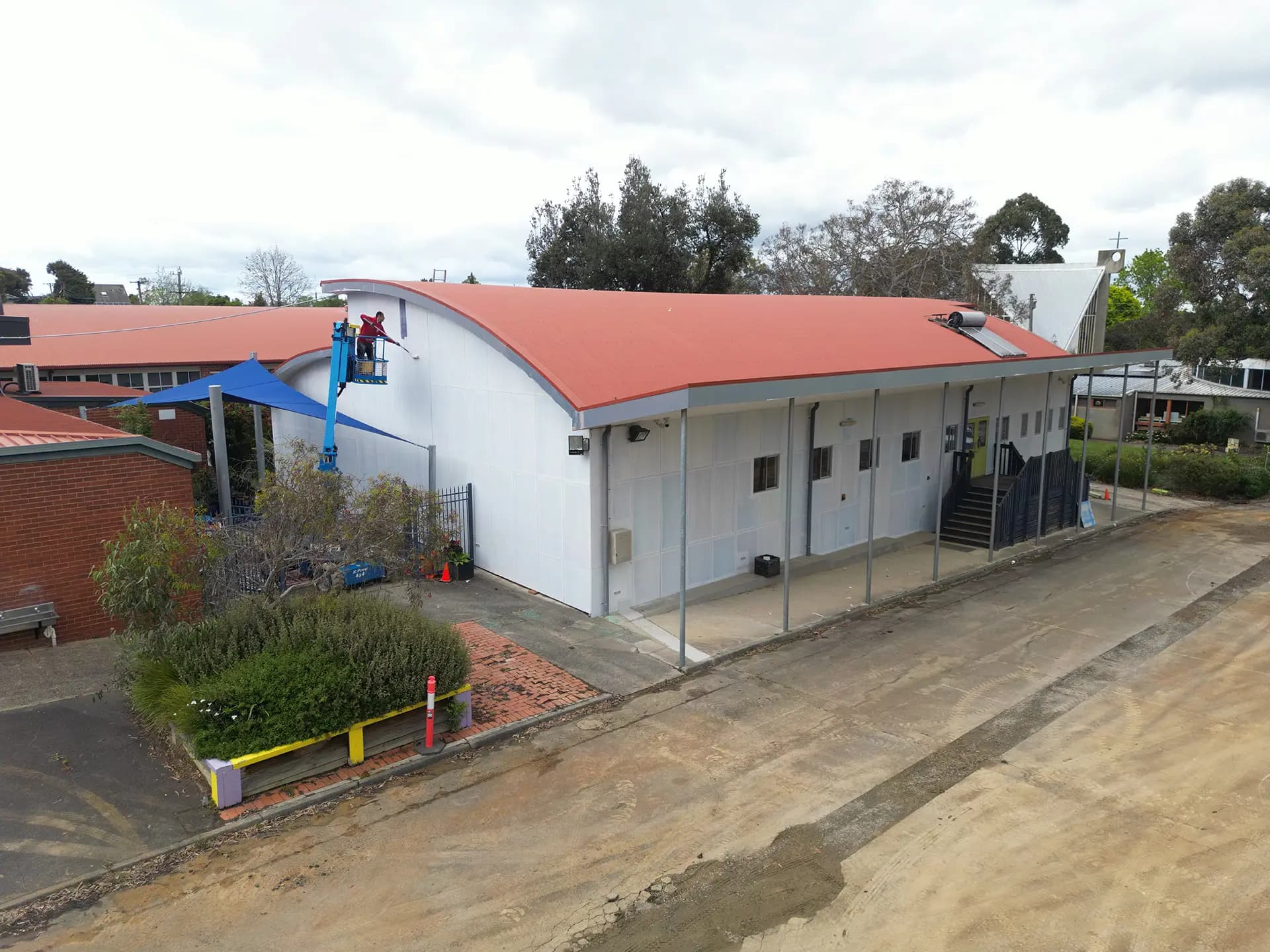
Schools wear out at hand height. Corridors, hall walls, door frames and locker runs take constant contact all day, and the finish that survives it is a washable, scrubbable system rather than a flat wall paint chosen on colour alone. Specifying by wear zone — durable systems at contact height, standard finishes above — is usually what decides whether a repaint still looks like a repaint three years later.
A two-week term break is about ten working days once access, set-up and pack-down are counted. That is enough for a classroom block or a wing of corridors; it is not enough for a full campus exterior. Larger scopes are normally split across consecutive breaks with each stage handed back complete, so the school never returns to a half-finished building.
Buildings put up before the 1970s can carry lead-based paint under later coats. Where the age of the building makes that plausible, the existing coating is assessed before any sanding or scraping starts, and preparation is planned so dust is contained rather than released across a site children use. That containment is a scheduling question as much as a safety one, because it takes time that has to be in the programme.
Outdoor structures are a separate specification. Play equipment, shade posts, ball walls and line marking face UV, impact and cleaning that interior systems are not built for, and they usually need a protective system rather than a decorative one. Court and playground line marking is also a wear item on its own cycle, not something that renews with the walls.