Noble Park, Victoria
Factory exterior repaint, Noble Park
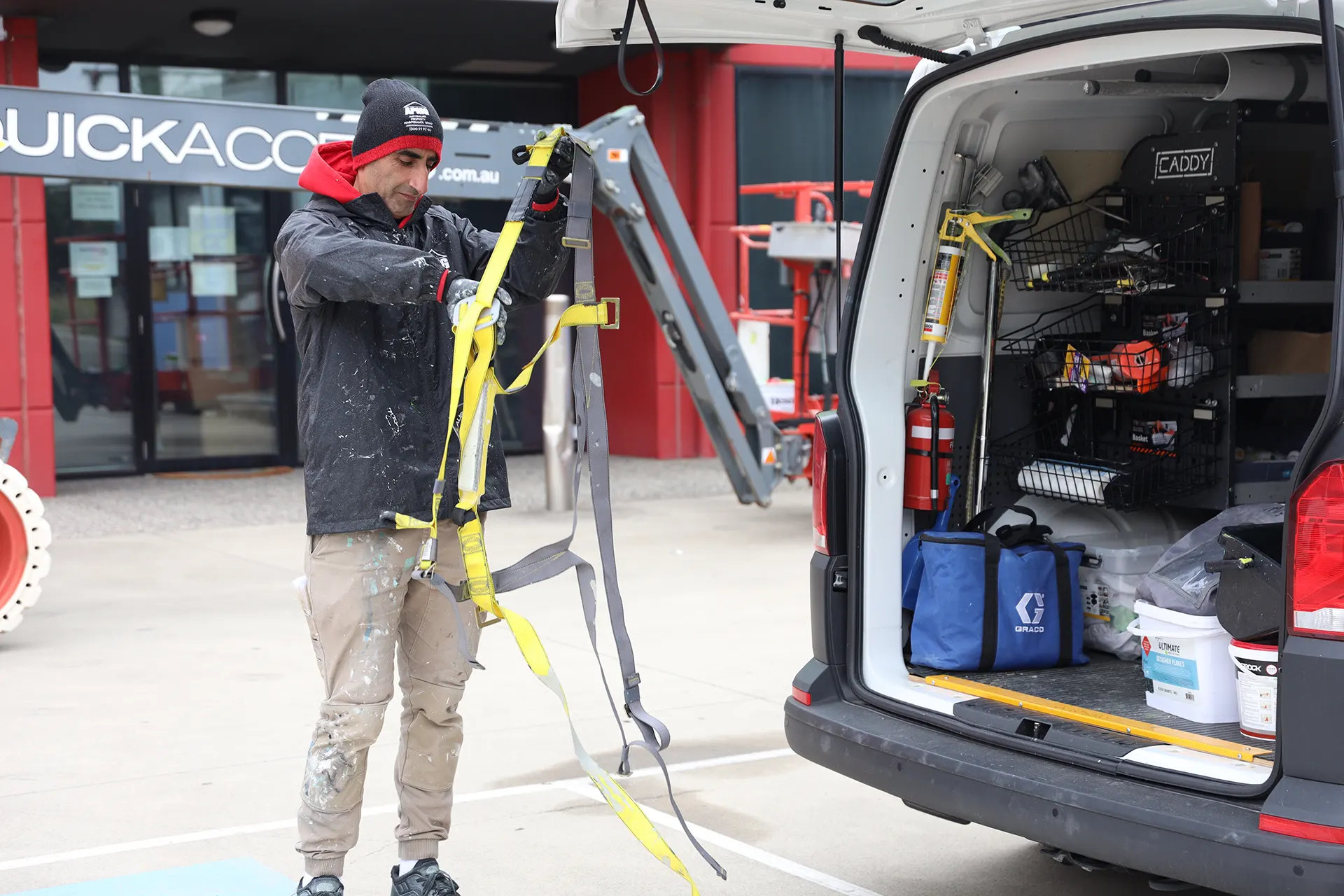
A full exterior repaint of a working factory, delivered in the client’s brand colours without interrupting production or site access.
Commercial painting
Industrial sites bring scale and substrate variety together: large-format exteriors, steelwork, concrete tilt panels and roof structures, usually while the facility keeps running.
The operational constraints that decide how the programme is built.
Concrete, render, colorbond and structural steel each need their own preparation and system. Older sites need existing coatings identified before specification.
Large-format facades and roof structures are planned with the appropriate access method for each elevation.
Programmes are built around production, dispatch schedules and vehicle movement so the facility keeps operating.
Identifying the substrate and the existing coating comes before any specification. Concrete tilt panel, cement render, Colorbond and structural steel behave differently and fail differently, and an older site is frequently carrying two or three previous systems, some of which will not accept a modern topcoat. Coating over an unidentified existing film is the single most common cause of an industrial repaint failing early.
Preparation is matched to what the assessment finds rather than to a default. Hot or cold pressure washing removes contamination and chalk, steam cleaning handles grease, and abrasion or chemical treatment is used where a film has to be keyed or removed. On steel, the standard of preparation determines how long the system lasts more than the product specified over it does.
On industrial substrates the coating is usually doing a protective job rather than a decorative one. Steelwork is being protected from corrosion, concrete from water ingress and carbonation, cladding from UV degradation. That changes what a quote should be compared on — film build and system, not colour and coat count. Melbourne sites near the bay also sit in a more aggressive exposure than inland equivalents, and the specification should reflect it.
Live operations shape the programme more than the painting does. Production runs, dispatch schedules, forklift and truck movement and roof access permits all constrain when an area can be worked, and large-format exteriors are usually staged elevation by elevation so one face is always clear for operations.
Noble Park, Victoria
A full exterior repaint of a working factory, delivered in the client’s brand colours without interrupting production or site access.
Only once it has been identified. Older industrial sites frequently carry several previous systems and some will not accept a modern topcoat. Coating over an unidentified film is the most common reason an industrial repaint fails early, so the existing system is assessed before anything is specified.
Whatever the assessment calls for: hot or cold pressure washing for contamination and chalk, steam cleaning for grease, abrasion or chemical treatment where a film needs keying or removing. On steel the standard of preparation determines the life of the system more than the product applied over it does.
On the system and film build rather than on colour and coat count. A protective specification is doing a measurable job — corrosion protection on steel, water and carbonation resistance on concrete, UV stability on cladding — and two quotes with the same number of coats can be specifying very different levels of protection.
Generally yes. Large-format exteriors are staged elevation by elevation so one face stays clear for operations, and the programme is built around production runs, dispatch and vehicle movement rather than around the painting sequence.
Commercial work rarely sits in one sector. These are the closest neighbours to industrial & warehouse.
Tell us the site, the constraints and when we are allowed on it.